

I’ve been thinking a lot about which companies will come out of this AI transition stronger than they went in, and tools like Slack keep coming up.
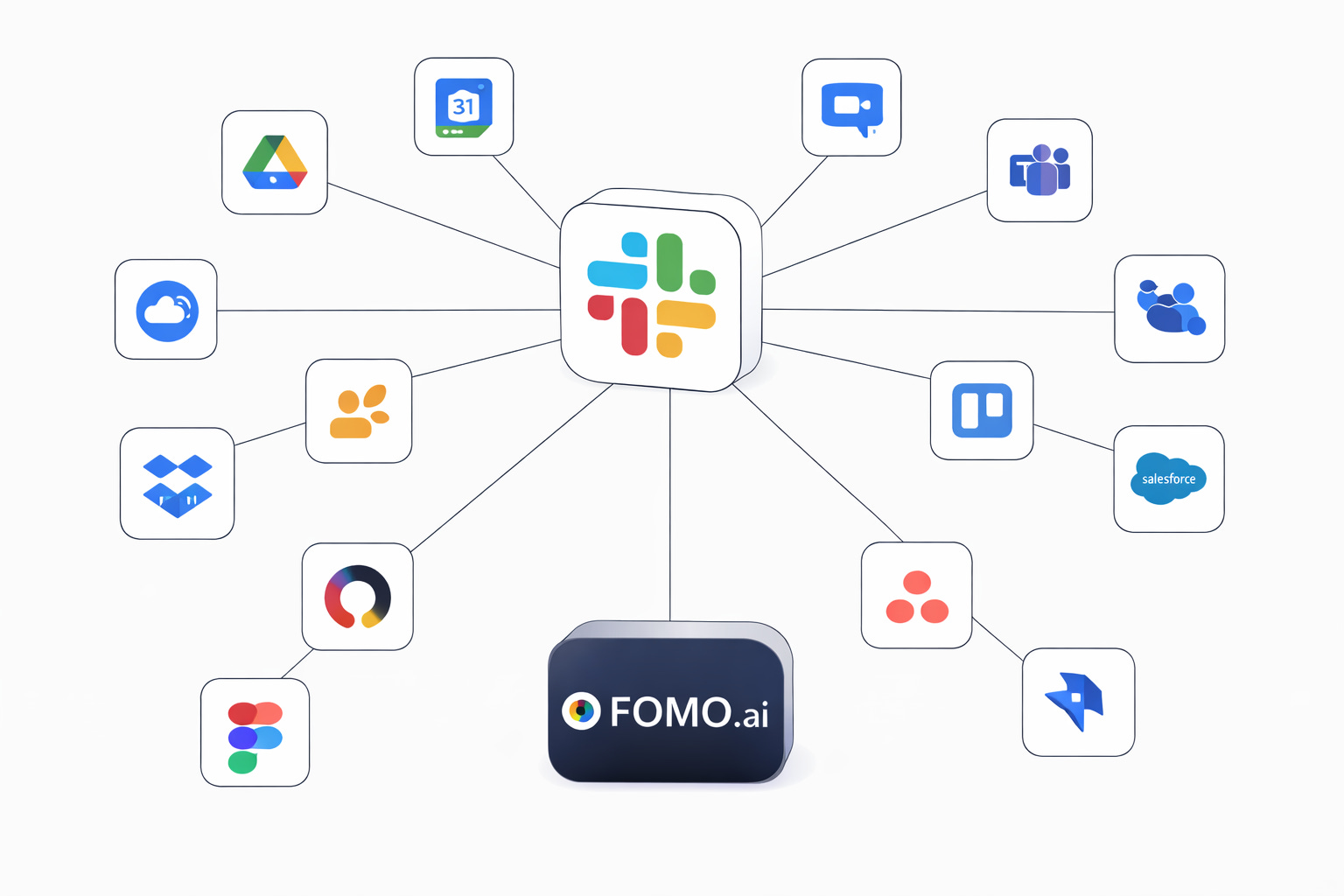
Think about how most of us already use Slack. It started as a messaging app, but over the years it has quietly become the place where work actually happens (if you use it in smart ways). You get notifications from your CRM, updates from your project management tool, alerts from your analytics platform, and messages from your team, all flowing through one interface. Slack became the connective tissue of the modern workplace almost by accident.
Now layer AI on top of that, and things get really interesting.
Every SaaS tool is racing to add AI features right now, and most of them are building chatbots or assistants that live inside their own product. But nobody wants to learn fifteen different AI interfaces. Nobody wants to open Salesforce to ask one AI a question, then switch to HubSpot to ask another, then jump into Google Analytics for a third conversation. That friction is real, and it creates an enormous opening for whoever can become the single conversational layer across all of your tools.
Slack is already halfway there. They already have the integrations. They already have the habit. And with Salesforce as the parent company pushing AI hard through their Agentforce platform, the infrastructure to make Slack the universal AI interface is being built right now.
I find myself imagining a near future where you simply type a question into Slack and the right AI agent, connected to the right tool, responds with the answer. You want to know how your paid campaigns performed last week? Ask in Slack. You need a first draft of a blog post based on your brand guidelines? Ask in Slack. You want to update a customer record and trigger a follow-up sequence? Ask in Slack.
(Which is why we have already built FOMO.ai ready for this world.)
The app becomes the interface layer, and all the individual SaaS tools become engines running quietly in the background.
This is where our Brand Lens becomes especially relevant, and I say that not as a pitch but as someone watching the architecture of how companies will actually use AI in practice. Brand Lens is essentially the strategic brain that understands a company’s brand voice, audience, competitive positioning, and content strategy at a deep level. If Slack becomes the universal interface where people ask AI to do things, something like Brand Lens becomes the intelligence layer that ensures every output, regardless of which tool is executing it, stays consistent and on brand.
Picture a marketing team operating entirely through Slack. One person asks for a social post, another requests an email draft, a third wants competitive analysis. Each request routes to a different tool or agent, but they all pass through the same Brand Lens layer that keeps everything aligned. The individual tools become interchangeable. The strategic intelligence layer becomes indispensable.
I think we are heading toward a world where most SaaS interfaces, as we know them, start to disappear for everyday users. The power users and admins will still log into the actual platforms to configure and manage things, but the majority of a team’s daily interactions with their software stack will happen through a conversational layer. And Slack is better positioned to be that layer than almost anyone else.
The companies that recognize this shift early and build their AI capabilities to work seamlessly within Slack, rather than trying to keep users locked inside their own product, are going to win. The ones that insist on being a destination rather than a capability will struggle.
It reminds me of what happened with mobile. The companies that embraced being part of the smartphone ecosystem thrived. The ones that tried to maintain their own separate experience got left behind. Slack as the universal AI interface could be that kind of inflection point for SaaS.
Dax is the CEO & Co-Founder at FOMO.ai, and author at 84Futures and dax.fyi. Take our free course, ‘How To Win With AI Search’.